How to Find Local Garage Door Contractors

Table of Contents
How to Find Local Garage Door Contractors: A Step-by-Step Process
Step 1: Search for Licensed Local Contractors
Step 2: Verify Credentials and Insurance
Questions to Ask a Garage Door Contractor Before You Hire
Credentials and coverage
Scope, parts, and diagnosis
Cost, warranty, and paperwork
Availability and safety
How to Read a Garage Door Repair Estimate and Compare Quotes
What a comparable estimate must include
Hidden fees to look for
Repair or replace?
How to normalize quotes before you decide
Garage Door Company Red Flags: Warning Signs to Avoid
Garage Door Repair Near Me: What to Expect from a Local Service Call
Conclusion
Frequently Asked Questions
Last Updated: October 9, 2026
How to Find Local Garage Door Contractors: A Step-by-Step Process
Finding a garage door contractor you can trust starts with verifying credentials, not comparing prices. According to the U.S. Consumer Product Safety Commission, garage doors are among the heaviest moving objects in a home, which is why hiring a licensed professional matters more than saving a few dollars. The process below covers exactly how to find local garage door contractors, vet them properly, and avoid the costly mistakes that plague this industry.

Step 1: Search for Licensed Local Contractors
Start by searching for "garage door repair near me" and cross-reference results across at least three sources: Google Maps, your state's licensing board database, and a trusted business directory. A single search result tells you almost nothing about whether a contractor is legitimate.
Most states require garage door contractors to hold a specific license. Maryland, for example, requires Home Improvement Commission (MHIC) licensing for anyone performing residential repair or installation work.
Step 2: Verify Credentials and Insurance
Ask every contractor for three documents before scheduling work: their state license number, a certificate of general liability insurance, and proof of bonding. Call the insurance company directly to confirm the policy is active.
A legitimate local contractor will provide these documents without hesitation. If a company stalls, makes excuses, or says they'll "bring it on the day," move on.
Questions to Ask a Garage Door Contractor Before You Hire
Knowing what to ask separates a confident hiring decision from a gamble. The questions below are grouped by what they actually protect you from, credentials, scope, cost, and safety, so you can use them as a phone-screen script before you ever book a visit. Print this list or save it to your phone; a contractor who answers all of them clearly is worth a second call.
Credentials and coverage
Are you licensed for residential garage door work in this state, and what is your license number? Ask them to read it to you over the phone, then look it up yourself on your state's licensing database before the visit. A number that doesn't match the company name is a stop sign.
Can you email me a certificate of general liability insurance and proof of bonding before the appointment? Call the insurer's number on the certificate to confirm the policy is active, photocopied certificates are easy to fake or recycle from an expired policy.
Will the technician who arrives be a W-2 employee or a subcontractor? This matters for who is responsible if something is damaged or someone is injured on your property.
Scope, parts, and diagnosis
Will you diagnose the door in person before quoting a price, or is the phone quote final? A firm phone quote without seeing the door is usually a lowball that grows once the technician is in your garage.
Do you carry the replacement parts on the truck, or will you need to order them? Springs, cables, rollers, and openers are the common failures; a stocked vehicle usually means a same-day fix, while a special-order part can add days.
Can you show me the failed part and explain in plain terms what caused it? A technician who can't explain the diagnosis is either guessing or upselling. Ask to see the worn spring, frayed cable, or cracked roller before it's replaced.
What brand and grade of replacement parts will you use, and do they match the original equipment? Mismatched spring gauges and off-brand openers are a common source of repeat failures and voided manufacturer warranties.
Cost, warranty, and paperwork
Will you provide a written estimate before any work begins, and does it itemize parts, labor, and any diagnostic fee separately? Verbal estimates are not enforceable and are the single most common source of billing disputes.
What is your labor warranty, and is it in writing? Ask for the length in months and whether it covers the part, the labor, or both. Verbal promises disappear when the door fails again.
Do you handle permits if the job requires them, and is the permit cost included in the quote? Some jurisdictions require a permit for opener replacement or structural work; a contractor who says "you don't need a permit" without checking is a red flag.
Availability and safety
What is your availability for emergency calls, including evenings and weekends, and is there an after-hours surcharge? Get the surcharge number before you agree, not after the technician is in your driveway.
Will you test the auto-reverse safety sensor and the door balance after the repair? Both are required safety checks, and a contractor who skips them is cutting corners you'll pay for later.
Pro Tip Ask for the technician's name and license number before the visit. A company that can't tell you who's coming to your home isn't running a professional operation, and if the person who arrives isn't the person named, that's a second red flag.
The answer to question six matters most. A contractor who can't explain the diagnosis clearly is either guessing or upselling, and the follow-up questions in this list are designed to expose that before you've paid a deposit.
How to Read a Garage Door Repair Estimate and Compare Quotes
A garage door repair estimate should itemize parts, labor, and any diagnostic fees separately. If you receive three quotes and they describe different problems, that's a red flag worth investigating, not a reason to pick the cheapest one. The goal of comparing quotes isn't to find the lowest number, it's to find the quote that covers the same scope of work at a fair price with no surprises.
What a comparable estimate must include
Before you can compare two quotes, they have to describe the same job. Ask each contractor to put the following in writing, in the same order, so you can line them up side by side:
Line Item | What to Look For | Red Flag |
Diagnosis | The specific failed component (e.g., torsion spring, cable, roller, opener motor) | Vague "door needs work" language |
Parts | Specific part names, sizes, and grades (e.g., spring gauge, cycle rating) | Vague "hardware" charges or no part numbers |
Labor | Flat rate or hourly, clearly stated, with estimated hours if hourly | Open-ended hourly with no cap |
Diagnostic fee | Stated upfront, and whether it's waived if you proceed | Fee revealed only after the visit |
Disposal | Whether old parts and packaging are hauled away | Silent on disposal, then a surprise charge |
Warranty | Labor and parts coverage in writing, with length in months | Verbal promises only |
Permits | Included if required by code | "You don't need a permit" without checking |
Payment terms | Deposit amount, accepted methods, and when the balance is due | Cash-only or full payment upfront |
Hidden fees to look for
A low headline number often hides costs that appear later. Watch for these patterns:
Trip or service-call fees that aren't mentioned until the technician is in your driveway.
After-hours surcharges that apply to evening and weekend calls, ask for the number in advance.
"While we're in there" upsells for parts that weren't in the original diagnosis.
If a quote is dramatically lower than the others, ask what it excludes. The gap is usually one of the items above.
Repair or replace?
Quotes can also differ because one contractor recommends repair and another recommends replacement. That's not automatically a scam, it can reflect a genuine judgment call. Use these questions to decide:
How old is the door? Most residential doors last roughly 15 to 30 years depending on material and maintenance; a door near the end of that range may not be worth a major repair.
What failed? A single spring, roller, or cable is usually a repair. A cracked or bent door panel, a failing opener on an old door, or multiple simultaneous failures often point toward replacement.
What's the repair-to-replace ratio? If the repair cost approaches a meaningful fraction of a new door, replacement may be the better long-term value, but get the replacement quote in writing before deciding.
How to normalize quotes before you decide
Put all quotes on one page, in the same line-item order as the table above.
Mark any line item that appears in one quote but not another, that's your hidden-fee candidate.
Call each contractor and ask them to confirm or add the missing line items in writing.
Compare the totals only after the scopes match.
Ask each contractor to explain, in plain terms, why their diagnosis differs from the others. A contractor who can't explain the difference is guessing.
The Federal Trade Commission's guidance on home improvement scams recommends getting every quote in writing and never paying the full amount upfront. A deposit for materials is normal; a demand for full payment before work starts is not. Keep every quote, text, and email until the job is complete and the warranty period has run.
Garage Door Company Red Flags: Warning Signs to Avoid
High-pressure sales tactics are the clearest signal to walk away. If a contractor tells you the door is "about to fall" and pressures you to sign today, get a second opinion before agreeing to anything.
Watch for these warning signs:
No physical business address, only a phone number
Cash-only payment demands
Refusal to provide a written estimate
A reputable local business will let you think about a quote overnight. Anyone who won't is selling urgency, not service.
Garage Door Repair Near Me: What to Expect from a Local Service Call
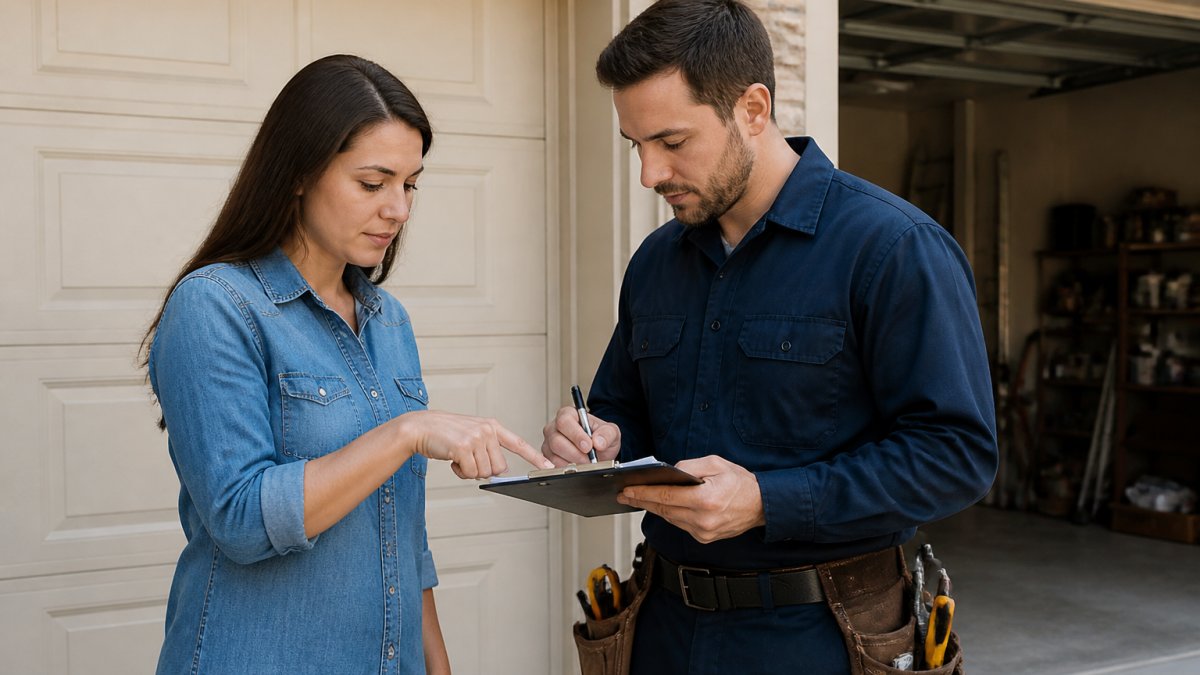
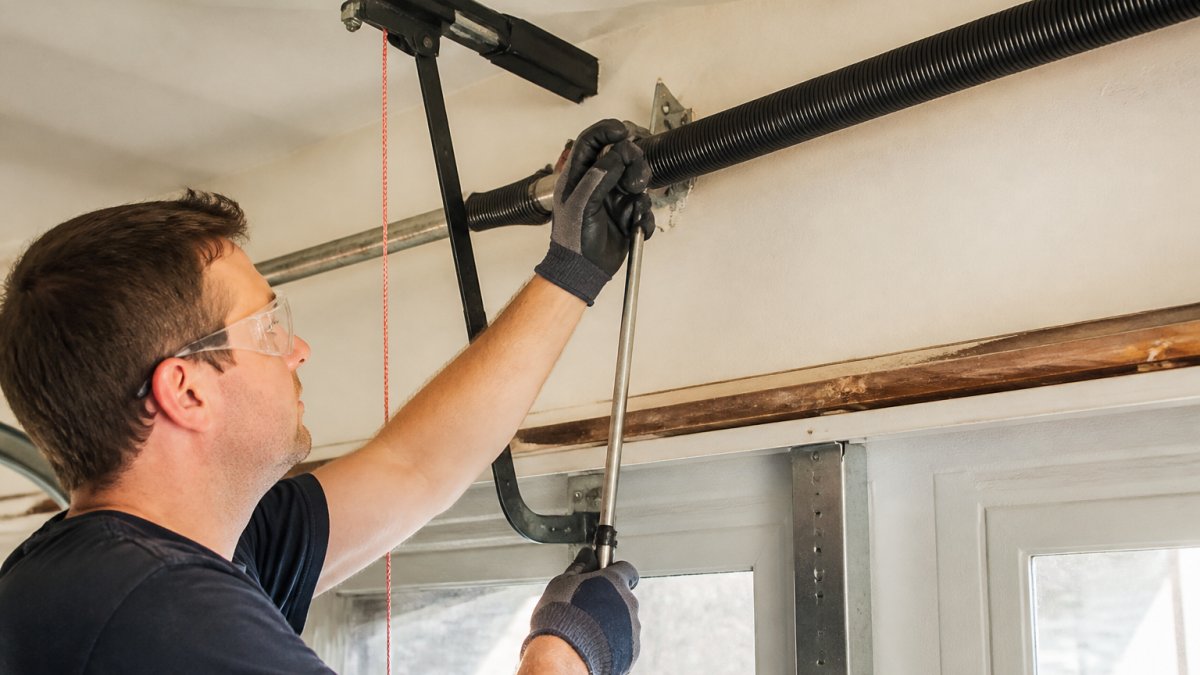
A standard residential service call includes a full inspection of springs, cables, rollers, tracks, and the opener before any repair begins. The technician should walk you through what they find and give you a written estimate before touching a tool.
Expect the visit to cover:
A safety inspection of all moving components
A clear explanation of what failed and what it will cost to fix
A written estimate you approve before work starts
The repair itself, using parts carried on the service vehicle
A test cycle to confirm the door opens and closes smoothly
A labor warranty on the completed work
Watch Out Never let anyone disconnect or bypass the auto-reverse safety sensor to "make the door work." That sensor is a federally required safety feature, and disabling it creates a serious injury risk.
Conclusion
Finding a garage door contractor who shows up licensed, insured, and willing to put an estimate in writing shouldn't be a gamble. ROLL Garage Door is MHIC-licensed, bonded, and carries general liability insurance, and we provide written estimates before any work begins, backed by free labor warranties and same-day service for requests made before 4 PM. Our fully stocked service vehicles mean most repairs are finished in a single visit. Request service with ROLL Garage Door and get a straight answer on what your door actually needs.
Frequently Asked Questions
How do I find a reliable garage door contractor near me?
Start by searching for local garage door contractors in your area using online directories, review sites, and recommendations from neighbors. Verify that the contractor is licensed and insured, and check for a physical business address and phone number. Ask for references and read customer reviews. A reliable contractor will provide a written estimate before starting work and will not pressure you into unnecessary repairs.
What should I check before hiring a garage door repair company?
Before hiring, confirm the company's license and insurance coverage. Ask for a written estimate that details the scope of work, parts, and labor. Check online reviews and ratings, and request references from recent local jobs. Ensure they offer a warranty on parts and labor. A reputable company will answer your questions clearly and provide a written contract.
How can I compare garage door repair estimates?
When comparing estimates, look beyond the total price. Check that each quote includes the same scope of work, parts, and labor. Ask about warranties, hidden fees, and whether permits are included. A detailed estimate should list specific parts and labor hours. Be wary of quotes that are significantly lower than others, as they may indicate subpar materials or future upcharges.
What are red flags when hiring a garage door repair service?
Red flags include no physical address, refusal to provide a written estimate, demands for full payment upfront, high-pressure sales tactics, and no proof of insurance. Also be cautious if the technician diagnoses different problems than other companies or insists on unnecessary replacements. Trust your instincts and get a second opinion if something feels off.
Should I repair or replace my garage door?
The decision depends on the door's age, condition, and repair costs. If the door is over 15 years old, has multiple broken panels, or repair costs exceed half the price of a new door, replacement may be more cost-effective. A professional can assess the door and provide options. Modern doors can also improve energy efficiency and curb appeal.
How do I know if a garage door company is licensed and insured?
Ask the company for its license number and insurance certificate. In most states, you can verify a contractor's license through the state licensing board's website. For example, in Maryland, check the MHIC license. Insurance should include general liability and workers' compensation. Never hire a contractor who cannot provide proof of both.
Request Service

Comments