Best Residential Garage Door Openers 2026

Table of Contents
What Makes a Residential Garage Door Opener Worth Your Investment
Best Smart Garage Door Opener Features to Prioritize
Quiet Garage Door Opener Options: Belt Drive vs. Chain Drive
Drive Types Explained: Which One Fits Your Home
Belt Drive Systems
Chain Drive Systems
Screw Drive and Direct Drive Options
Motor Power, Lifting Capacity, and Compatibility
Understanding Horsepower and Door Weight
Door Height and Structural Factors
Track Configuration and Mounting Compatibility
Ceiling Height and Clearance
Existing Wiring and Electrical Compatibility
Compatibility Checklist Before Purchase
When to Upgrade Beyond Minimum Requirements
Garage Door Opener Installation Cost and Long-Term Ownership
Opener Purchase Price vs. Installed Cost
Warranty Coverage and What It Actually Covers
Common Repairs and Expected Frequency
Parts Availability and Service Network
When Professional Installation Is Non-Negotiable
Security, Safety Sensors, and Battery Backup Reliability
How to Choose the Right Opener for Your Home
Frequently Asked Questions
Last Updated: October 11, 2026
What Makes a Residential Garage Door Opener Worth Your Investment
A quality residential garage door opener is the difference between a garage that functions reliably for years and one that becomes a source of frustration and unexpected repair costs, which is why selecting the right residential garage door openers matters so much.
Your garage door operates hundreds of times per year, stressing the motor, drive system, and safety mechanisms. An undersized opener fails prematurely; an oversized one wastes energy and creates noise. Match the opener's capabilities to your door weight, height, and usage frequency.
Most homeowners focus on price and brand, missing factors that determine longevity. Installation quality, motor horsepower, drive type, and backup power all influence total cost of ownership. A cheaper opener that fails often costs more than investing in a reliable unit upfront.
Best Smart Garage Door Opener Features to Prioritize
Smart garage door openers add convenience and security, but not all smart features are equally valuable.
Smartphone app and remote access tops the list.
Battery backup is essential in areas with frequent outages. Test it monthly by unplugging the opener to confirm the door still operates.
Wi-Fi connectivity and voice control work best without a separate hub. Native Wi-Fi integration avoids added complexity and failure points.
Real-time alerts notify you when the door opens or closes. This catches problems early.
Skip novelty features like automatic closing timers. They increase cost without solving real problems.
Quiet Garage Door Opener Options: Belt Drive vs. Chain Drive
Noise level matters more than most guides acknowledge, especially if you have living space above the garage or bedrooms nearby. A loud opener can disrupt sleep and create daily frustration.
Belt drive openers are the quietest option available. The rubber belt absorbs vibration and operates with minimal noise, making them ideal for homes where the garage is near bedrooms or living areas.
Chain drive openers are noisier but more affordable and durable. They use a metal chain similar to a bicycle chain to lift the door. The chain requires periodic lubrication and adjustment, but it lasts longer than a belt.
Drive Types Explained: Which One Fits Your Home
Understanding drive types is the foundation of choosing the right opener. Each has distinct strengths and weaknesses that affect performance, noise, and maintenance.
Belt Drive Systems
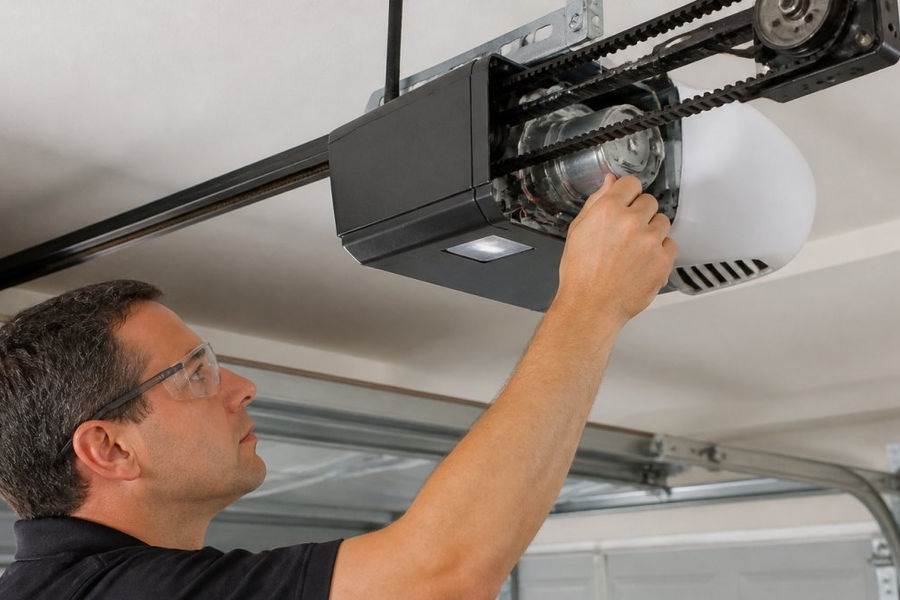
Belt drive openers use a rubber belt to move the carriage and are the quietest option. They require no lubrication and minimal maintenance.
For homes where noise matters, this investment is worthwhile; otherwise, chain drive is more economical.
Chain Drive Systems
Chain drives are affordable and durable. They require lubrication every 6 months to prevent rust and wear.
Noise is the trade-off. If your garage is attached to your home or near bedrooms, you'll hear it every time the door opens or closes. For detached garages or homes where noise isn't a factor, chain drive is the most practical choice.
Screw Drive and Direct Drive Options
Screw drives operate at moderate noise levels with minimal maintenance. Direct drives are exceptionally quiet with no maintenance but cost more and have limited availability.
Motor Power, Lifting Capacity, and Compatibility
Choosing an opener with insufficient power is one of the most common mistakes homeowners make. An undersized motor strains constantly, fails prematurely, and may not open your door reliably in cold weather. Oversized motors waste energy and create unnecessary noise. Matching motor power to your specific door is non-negotiable.
Understanding Horsepower and Door Weight
Residential garage door openers come in three standard sizes: 1/2 horsepower, 3/4 horsepower, and 1 horsepower. Most homes use 1/2 or 3/4 HP.
The critical step is determining your actual door weight. Check the door itself, most manufacturers stamp the weight on the back of the top panel or on the frame. If you can't find it, contact your door manufacturer with your door model number, or ask a garage door technician to weigh it during a consultation. Guessing is a false economy that leads to opener failure.
Door Height and Structural Factors
Non-standard door heights (over 8 feet) require the next horsepower tier up. Doors with more panels are stiffer and require more lifting force; verify compatibility before purchase.
Track Configuration and Mounting Compatibility
Openers must be compatible with your existing track system. Most residential doors use standard vertical tracks; verify carriage bracket fit before purchase. Older garages may need ceiling reinforcement, a technician assesses this during consultation.
Ceiling Height and Clearance
The opener motor hangs from the ceiling, and the carriage travels along the rail. You need sufficient clearance above the door for the opener to fit and operate safely.
Standard openers require 12-18 inches of clearance above the closed door. Measure clearance before purchase; less than 12 inches may require specialty openers or modifications.
Existing Wiring and Electrical Compatibility
Openers require a dedicated 120-volt circuit. Upgrading drive types, adding smart features, or installing backup batteries may require electrical upgrades. Smart openers need reliable Wi-Fi; weak signals may require a Wi-Fi extender.
Compatibility Checklist Before Purchase
Use this checklist to verify compatibility before committing to an opener:
Door specifications:
Door weight (confirmed from manufacturer or weighed by technician)
Door height (measure from bottom to top of closed door)
Door material (steel, wood, fiberglass, composite)
Panel configuration (number of panels and their size)
Track type (standard vertical, or specialty configuration)
Door condition (balanced, no visible damage, moves smoothly)
Garage structure:
Ceiling height above closed door (minimum 12 inches clearance needed)
Ceiling material and structural integrity (can it support opener weight?)
Obstructions above door (HVAC, electrical, storage)
Existing track condition (rust, misalignment, damage)
Electrical and connectivity:
Dedicated 120V circuit available or can be installed
Wi-Fi signal strength in garage (if smart opener is planned)
Backup power requirements (battery backup needs outlet access)
Existing opener (if replacing):
Current opener type (belt, chain, screw, direct drive)
Mounting bracket compatibility with new opener
Existing wiring compatibility
If any item is uncertain, have a technician perform a pre-purchase assessment to prevent costly incompatibility issues.
When to Upgrade Beyond Minimum Requirements
If your door weight is near the upper limit of an HP tier (say, 330 pounds for a 1/2 HP opener), upgrade to the next tier. The extra power provides a safety margin and extends the opener's lifespan by reducing strain.
If your garage is cold (unheated in winter), upgrade one HP tier. Cold temperatures increase door friction and require more lifting power.
If you have frequent power outages and rely on battery backup, a larger motor drains the battery faster. Verify that your backup system has sufficient capacity for your motor size and expected cycle count during an outage.
Garage Door Opener Installation Cost and Long-Term Ownership
Total cost of ownership extends far beyond the opener's purchase price. Understanding the full financial picture, including installation, accessories, repairs, and warranty coverage, helps you avoid cheap openers that become expensive headaches.
Opener Purchase Price vs. Installed Cost
Residential openers vary in cost. Professional installation, disposal, electrical work, and accessories will add to the total. Complete installations vary depending on drive type and features.
Warranty Coverage and What It Actually Covers
Most warranties cover parts only, not labor. Belt drives, chain drives, motors, safety sensors, and backup batteries typically include warranties. Some installers offer extended labor warranties covering both parts and installation.
Common Repairs and Expected Frequency
Understanding what breaks and when helps you budget for ownership. The most common repairs are:
Safety sensor replacement (typically fails every 5-8 years): $150-$300 parts and labor. Sensors degrade from dust, humidity, and UV exposure. This is the most frequent repair homeowners face.
Belt replacement (belt drives only, every 10-15 years): $200-$400. This is predictable and expected; budget for it as routine maintenance rather than a surprise failure.
Chain adjustment or replacement (chain drives, every 12-18 years of heavy use): $150-$350. Chains stretch over time and require periodic tightening. Full replacement is less common but possible.
Motor replacement (rare before 10 years, more common after 15): $400-$800 parts and labor.
Backup battery replacement (every 3-5 years): $100-$200. Batteries degrade predictably and should be replaced proactively rather than discovered dead during an outage.
Garage door spring replacement (not the opener's fault, but often done simultaneously): $200-$400.
Parts Availability and Service Network
Not all openers are equally easy to repair. Major manufacturers (those with nationwide distribution and multiple models) have parts available through local garage door service companies. Specialty or imported openers may require ordering parts directly, adding weeks to repair time and potentially higher costs.
Verify replacement parts are available locally before purchase; obscure brands may incur higher shipping costs and extended downtime. Establish a relationship with a local service company and confirm they stock parts for your opener.
When Professional Installation Is Non-Negotiable
Some situations demand professional installation despite the added cost. Improper installation is the leading cause of premature opener failure and safety hazards.
Professional installation is essential for older ceilings, non-standard door heights, drive type upgrades, outdated wiring, or labor warranties. DIY is viable only for identical replacements in straightforward setups. Professional installation is insurance against costly mistakes.
Security, Safety Sensors, and Battery Backup Reliability
Safety sensors are legally required and detect obstructions; test monthly. Rolling code technology prevents remote cloning. Battery backup allows operation during outages; test quarterly. Deadbolt locks on garage entry doors add security.
How to Choose the Right Opener for Your Home
Identify door weight and height to determine minimum horsepower. Consider noise tolerance, belt or direct drive for homes with living space above the garage. Evaluate smart features based on actual usage.
Opener Type | Noise Level | Maintenance | Cost | Best For |
Belt Drive | Quietest | Minimal | Higher | Homes near living spaces |
Chain Drive | Louder | Regular lubrication | Lower | Detached garages, budget-conscious |
Screw Drive | Moderate | Minimal | Moderate | Balanced performance needs |
Direct Drive | Quietest | None | Highest | Maximum quiet operation |
The right opener for your home depends on your specific situation. ROLL Garage Door helps homeowners evaluate these factors and choose systems that deliver reliability, quiet operation, and smart features that actually solve problems. Request a consultation to assess your garage's needs and receive a transparent estimate before any work begins.
Choosing a residential garage door opener that works reliably for years requires understanding drive types, motor power, and which smart features actually matter. ROLL Garage Door brings Maryland MHIC licensing, transparent pricing with written estimates, and same-day service to help you select and install the right system.
Frequently Asked Questions
What is the best residential garage door opener for a home in 2026?
The best residential garage door opener depends on your garage layout, noise tolerance, and whether you want smart features. Belt-drive openers offer quiet operation suitable for living spaces above the garage. Chain-drive systems provide durability for heavier doors. Smart-enabled openers add remote access and monitoring through smartphone apps. Prioritize compatibility with your door weight and height, warranty coverage, and whether you need battery backup for power outages. Professional installation ensures proper setup and long-term reliability.
Is a quiet garage door opener worth the extra cost?
Yes, if you have bedrooms or living spaces above or adjacent to your garage. Belt-drive and screw-drive openers offer quieter operation compared to chain-drive systems. The quieter operation reduces vibration and noise disturbance, especially important for older homes or properties in close proximity to neighbors. The price difference between drive types is typically modest compared to the long-term comfort benefit.
Should I install a garage door opener myself or hire a professional?
Professional installation is strongly recommended. Proper installation requires balancing the door, setting safety sensors, configuring automatic reversal systems, and ensuring the opener is correctly calibrated to your door's weight and height. Incorrect installation can damage the door, void warranties, and create safety hazards. Professional installers carry liability insurance and provide workmanship guarantees. Same-day service is often available for urgent replacements or upgrades.
What safety features should a residential garage door opener have?
Essential safety features include automatic reversal (stops and reverses the door if it detects an obstacle), safety sensors at the base of the door, deadbolt locks on manual release mechanisms, and battery backup for power outages. Rolling-code remotes prevent unauthorized access. Wall controls and keypads should be mounted out of children's reach. Modern openers also include monitoring capabilities so you can verify the door is closed remotely, adding security and peace of mind.
Request Service

Comments